

Belgium’s Tourism Ecosystem Came Together to Rethink Sustainable Travel
- European tourism SMEs, youth and ecosystem representatives exchanged perspectives on sustainable tourism models
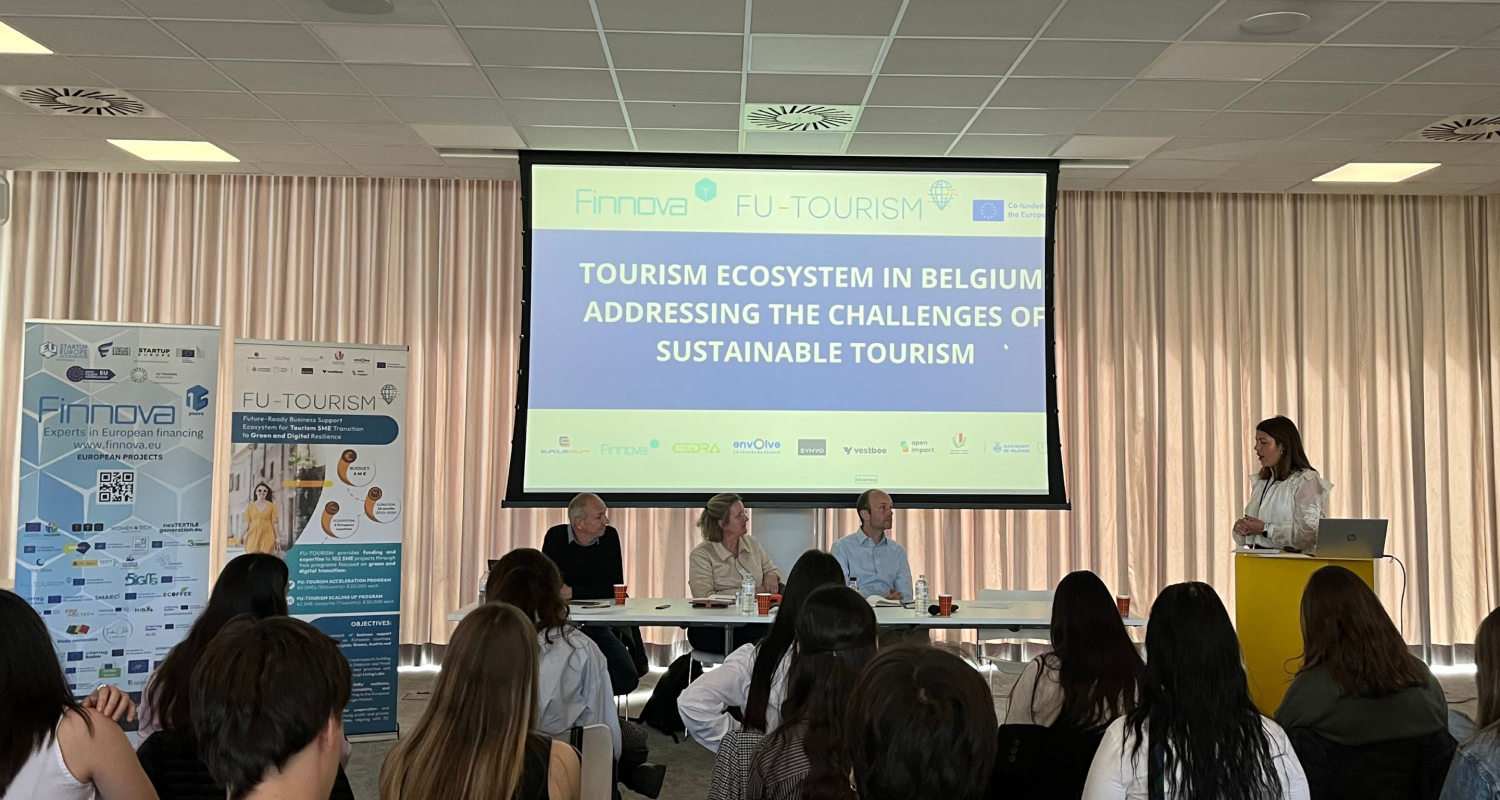
Brussels, April 27 — Tourism SMEs, young professionals and key stakeholders gathered in Brussels and online to debate how Europe’s tourism sector can become more sustainable, inclusive and resilient. Held within the framework of the EU‑funded FU‑TOURISM project, the event “Tourism Ecosystem in Belgium: Addressing the Challenges of Sustainable Tourism” provided a platform for exchange on the future of sustainable tourism in Belgium and across Europe.
Organised by Finnova Foundation, the event opened with welcome remarks highlighting the importance of collaborative and inclusive approaches in a rapidly transforming tourism sector. This was followed by an introductory session presenting the objectives and scope of the FU‑TOURISM project, underlining its commitment to supporting innovation, resilience, and sustainability within European tourism ecosystems.
Building on this context, a dedicated session on SMEs and ecosystem perspectives highlighted firsthand experiences from tourism businesses actively engaged in sustainable tourism. The session featured Niki de Schryver, Founder and CEO of COSH, Karel Vanderheyden, Co‑founder of Camprea, and Louis Lammertyn, Co‑founder of BookBetter, who presented their companies and outlined the core areas of their work. They shared how sustainability is embedded in their day‑to‑day operations and business strategies and, through practical examples, showcased how SMEs contribute to more responsible tourism models, emphasising sustainable practices, innovation and collaboration as key drivers for positive change within the tourism sector.
In parallel, the programme also featured key contributions from European and local tourism stakeholders. Christina Russe, Deputy Secretary General of The European Travel Agents’ and Tour Operators’ Associations, provided insights into the European tourism ecosystem, outlining current trends, challenges and opportunities for the sector in the context of sustainability. This perspective was complemented by Patrick Struelens from Visit Brussels, who highlighted the role of destination management organisations in fostering sustainable and responsible tourism, underlining the importance of coordinated action at local and regional level to support the transition towards more sustainable tourism models.
Youth engagement was another central focus throughout the event, particularly during an open discussion session in which participants reflected on the needs, expectations and aspirations of young people in tourism, both as professionals and as conscious travellers. The exchange highlighted the importance of skills development, meaningful career opportunities and value‑driven tourism models, while also identifying the barriers young people continue to face when entering and shaping the sector. These reflections fed into the final open Q&A and closing session, where participants shared key takeaways and collectively stressed the need for continued dialogue, stronger inclusion of youth perspectives, and enhanced support mechanisms for SMEs transitioning towards more sustainable tourism models.
Overall, the event generated valuable reflections and actionable insights that will feed into the ongoing FU-TOURISM project. By fostering connections between young people, SMEs, and tourism stakeholders at both local and European levels, the session contributed to advancing a more sustainable, inclusive, and resilient tourism ecosystem in Europe.
To learn more about FU-TOURISM, subscribe to our newsletter.
You can also follow us on social media:
– X
– YouTube
Contact email: