

FU-TOURISM brings together the rural tourism ecosystem in a Birds of a Feather dialogue to shape the future of sustainable tourism
The Birds of a Feather event organised in San Xoán de Río gathered public authorities, tourism experts, entrepreneurs, young people and local stakeholders to exchange ideas, strengthen collaboration and explore European opportunities for rural tourism.
San Xoán de Río (Ourense, Spain), 17 July 2026. The Birds of a Feather (BoF) event organised by the European project FU-TOURISM brought together public authorities, tourism professionals, entrepreneurs, young people and representatives of the local tourism ecosystem to exchange ideas, strengthen collaboration and identify common solutions for the future of sustainable rural tourism.
Organised within the framework of FU-TOURISM, a project funded by the European Union through the Single Market Programme (SMP), the event followed the Birds of a Feather methodology: an open and participatory discussion format designed to encourage networking, knowledge exchange and collaboration among local stakeholders. Rather than a traditional conference, the event created a space where participants could openly discuss common challenges, share experiences and explore new opportunities for cooperation.
Under the title “Sustainable Rural Tourism for Territorial Resilience”, participants explored how innovation, entrepreneurship, sustainability and European cooperation can contribute to creating more resilient rural destinations while generating opportunities for local communities. Discussions also highlighted the role of tourism in tackling depopulation, promoting local heritage, supporting entrepreneurship and contributing to the sustainable development of rural territories.
Opening the event, José Miguel Pérez Blecua, Mayor of San Xoán de Río, welcomed participants by highlighting the municipality’s commitment to sustainable tourism as a driver of local development, economic diversification and population retention.
The institutional opening also featured Francisco Millán Mon, Member of the European Parliament, who underlined the importance of European policies and funding instruments in supporting rural territories and preserving Europe’s natural and cultural heritage.
Throughout the morning, representatives from different organisations shared practical experiences on tourism innovation, entrepreneurship and territorial development.
Andrés López, Vice-President for Tourism and Wine Tourism at the Finnova Foundation, stressed that sustainable tourism should create value for local communities by integrating heritage, gastronomy and local production into innovative tourism experiences.
Representing the Ourense Institute for Economic Development (INORDE), Emma González Diéguez explained how entrepreneurship support programmes and the promotion of endogenous resources contribute to revitalising rural areas and creating new economic opportunities.
Meanwhile, Nachy López, Director of Turislab, highlighted the importance of innovation ecosystems, collaboration between stakeholders and entrepreneurial initiatives to improve the competitiveness of rural destinations.
A Birds of a Feather dialogue on the future of rural tourism
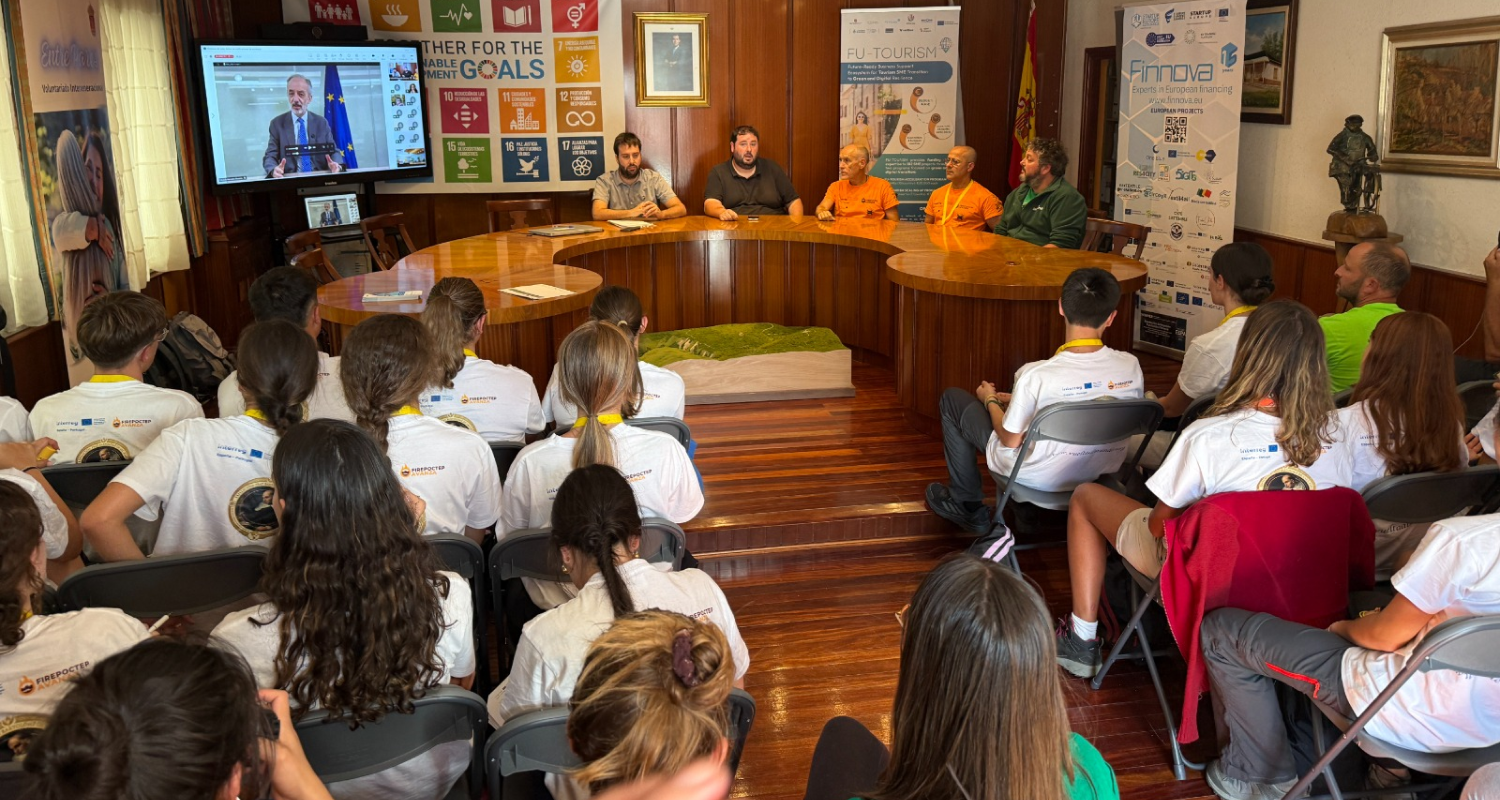
One of the highlights of the event was the Birds of a Feather roundtable discussion, conceived as an open dialogue where participants exchanged ideas and experiences on the future of sustainable rural tourism.
The discussion brought together José Miguel Pérez Blecua, Mayor of San Xoán de Río; Jesús Luna Torres, Director of Proyecto Vuelta al Mundo; Adrián Noheda, Project Manager at the Finnova Foundation; together with David Rosa, Borja Pérez Castro and other representatives of the local tourism ecosystem.
The conversation explored how innovation, entrepreneurship, sustainability and European cooperation can contribute to creating more resilient rural destinations while generating opportunities for local communities. Participants highlighted the importance of involving local stakeholders in tourism strategies, strengthening collaboration between public authorities, businesses, educational initiatives and civil society, and fostering knowledge exchange to build stronger and more competitive rural tourism ecosystems.
During the discussion, Jesús Luna Torres presented Proyecto Vuelta al Mundo, an educational initiative that encourages young people to discover rural territories while promoting sustainability, environmental awareness and wildfire prevention.
For his part, Adrián Noheda introduced the opportunities offered by FU-TOURISM, explaining how the project supports tourism SMEs through financial support, mentoring, specialised training and networking opportunities to accelerate their green and digital transition. He also presented European mobility opportunities available for young people and professionals interested in innovation and sustainable tourism.
Strengthening tourism ecosystems through collaboration
The event concluded with a shared message from all participants: the future of rural tourism depends on collaboration between public authorities, businesses, entrepreneurs, educational initiatives, young people and local communities. Tourism should not only attract visitors but also improve the quality of life of residents, create local employment, preserve cultural and natural heritage, and strengthen the resilience of rural territories.
Through activities such as the Birds of a Feather events, FU-TOURISM goes beyond supporting tourism SMEs by helping to build stronger local tourism ecosystems, encouraging knowledge exchange, fostering partnerships and creating new opportunities for innovation across Europe.